Data cleanup doesn’t usually feel expensive. It feels necessary.
A field needs to be updated. A status needs to change. Thousands of records need to be corrected after a process change. So teams export data, adjust it in a spreadsheet, and import it back into NetSuite.
It works—until it doesn’t.
What looks like a quick fix often turns into hours of effort, follow-up corrections, and uncomfortable questions later. Over time, manual data cleanup quietly becomes one of the most expensive operational habits inside NetSuite.
Why Data Cleanup Happens So Often
Most organizations don’t set out to create messy data. Cleanup usually happens because the business is evolving:
- New subsidiaries or locations are added
- Item classifications change
- Processes are refined
- Legacy data doesn’t match current standards
- Integrations introduce inconsistencies
None of these are mistakes. They’re signs of growth.
The issue is how those changes are handled once they hit the system.
The Hidden Cost of Spreadsheets and CSV Imports
Manual cleanup relies heavily on spreadsheets and CSV imports. While these tools are familiar, they introduce real risk:
- One bad formula can corrupt thousands of records
- Imports overwrite fields that weren’t meant to change
- There’s little visibility into what changed and why
- Rollbacks are difficult or impossible
- Accountability gets lost quickly
Even when everything goes “right,” the process consumes valuable time from skilled team members.
Why This Doesn’t Scale
At low volume, manual updates feel manageable. At scale, they become dangerous.
As record counts grow:
- Errors are harder to spot
- Validation becomes inconsistent
- Documentation falls behind
- Teams hesitate to make needed changes
Eventually, people stop fixing data because they’re afraid of making things worse.
That fear slows the business.
What Data Cleanup Should Look Like Instead
A better approach to data cleanup focuses on three principles:
- Repeatability – the process works the same way every time
- Visibility – changes are logged and easy to review
- Safety – users can make updates without putting the system at risk
Cleanup shouldn’t feel like surgery. It should feel routine.
How EZsuite Mass Changes the Game
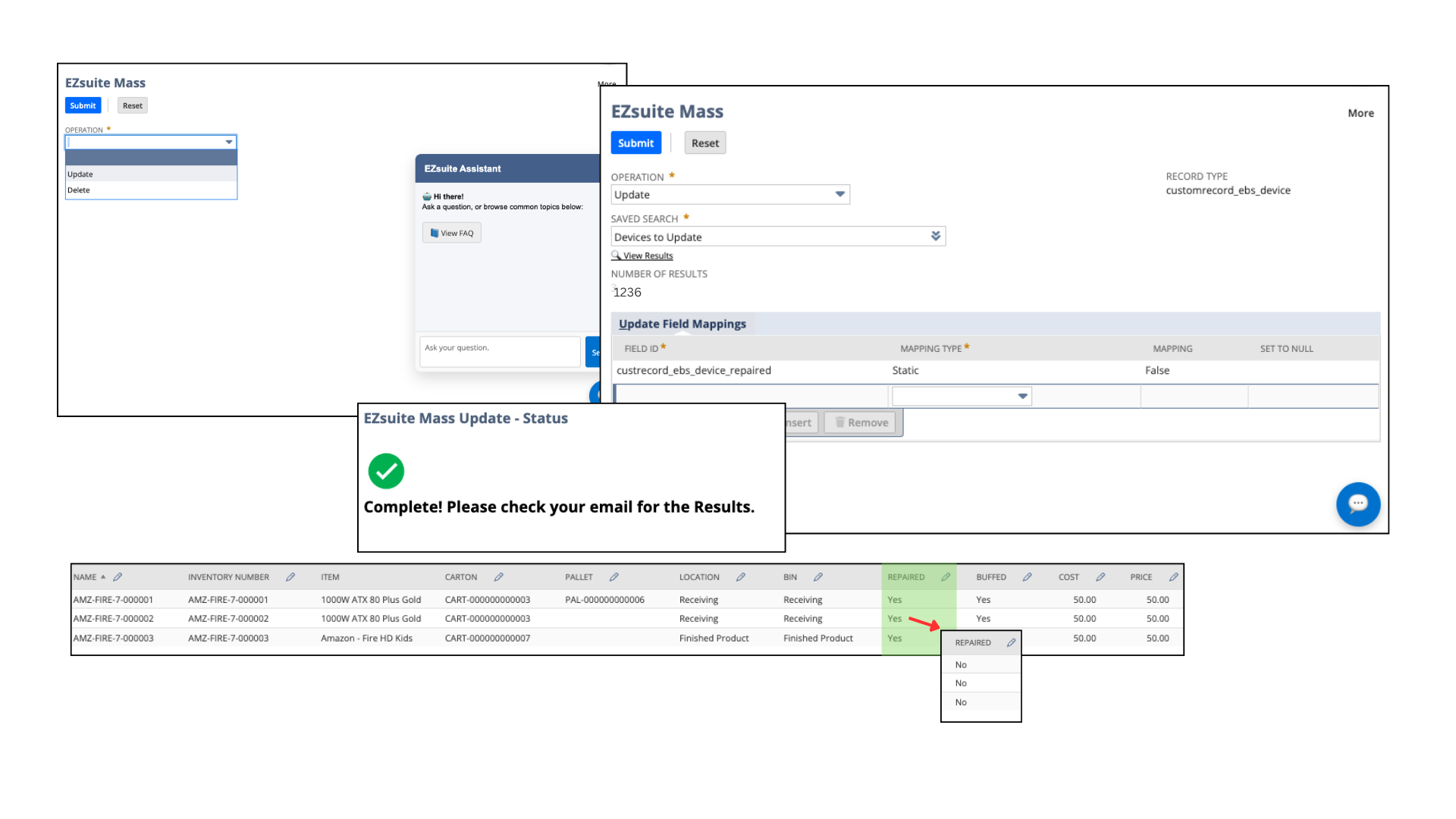
EZsuite Mass was built to give teams a safer, faster way to handle large-scale data updates directly inside NetSuite—without scripting.
Instead of exporting data, users:
- Leverage Saved Searches to define the target records
- Select which fields to update or clear
- Apply dynamic or fixed values
- Execute updates with full logging
Everything happens in one system, with built-in accountability.
Designed for Business Users, Not Just Admins
One of the biggest advantages of EZsuite Mass is that it doesn’t require deep technical expertise.
With the right access, business users can:
- Perform bulk updates confidently
- Reduce reliance on IT or admins
- Fix data issues as they arise
- Follow a consistent, approved process
Admins retain oversight, but they’re no longer the only ones capable of keeping data clean.
Real-World Impact
Organizations using EZsuite Mass often report:
- Faster cleanup cycles
- Fewer data-related errors
- Less rework for finance and ops
- Higher confidence in reporting
Data stops being something teams fear—and starts being something they trust.
Final Thought: Clean Data Is a Competitive Advantage
Every automation, report, and decision in NetSuite depends on data quality.
EZsuite Mass helps organizations maintain clean data without slowing the business or increasing risk. If manual cleanup is eating time, creating stress, or limiting growth, it may be time to rethink how large-scale updates are handled.